Workout Display for Gyms
CloudFit helps gyms and fitness studios deliver better workouts on screen with customizable timers, digital whiteboards, exercise demos, and flexible multi-screen layouts that make sessions clearer, more repeatable, and easier to run.
What Is a Gym Workout Display System?
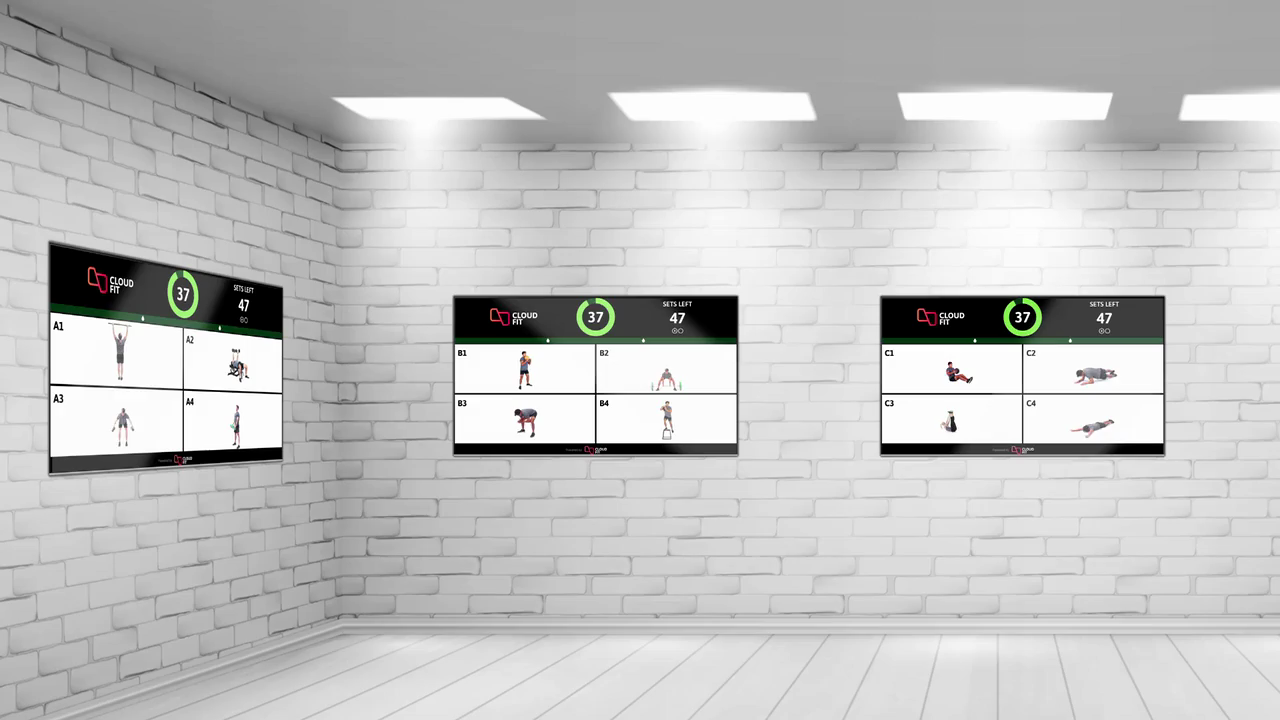
A gym workout display system uses one or more TVs or screens to help deliver better workouts on the gym floor.
Instead of relying only on a whiteboard, shouted instructions, or manual timekeeping, it helps run the workout on screen using customizable timers and intervals, digital whiteboards with workout information and instructions, and exercise videos or media that help demonstrate movements.
A good workout display system does more than just show the workout. It helps reduce repeated directions, keeps timing visible, and makes group workouts easier to follow and run on the floor.
It also helps gyms systemize their workout delivery, make classes more repeatable, and create a more consistent experience across different coaches, sessions, and locations.
A strong workout display system is not just about putting content on a screen.
It helps gyms run better sessions, support coaches on the floor, and deliver a clearer, more professional workout experience for members.
Coaches should not spend half the session repeating instructions, counting down intervals, or directing traffic around the room.
Workout displays reduce repeated explanations and keep timing visible so coaches can focus more on form, motivation, and member support during group workouts.
Members follow sessions more confidently when the workout is clear, visual, and easy to track from anywhere on the floor.
Show the structure, exercises, timing, and what comes next so workouts feel easier to follow and more engaging to complete.
Gyms need more consistency than a whiteboard and a coach's memory can usually provide.
Workout displays help make sessions more repeatable across class times, coaches, and locations by presenting the workout in a more structured way.
Many gyms have multiple stations, zones, or screens that need different content at the same time.
The right system can run different content on different screens, helping larger rooms and more complex training formats flow more smoothly.
Workout Displays, Gym Screens, Digital Whiteboards, or Workout Casting?
This category is still new enough that the language has not fully settled.
Depending on the gym, supplier, or search term, people may describe the same kind of system in different ways, including:
- workout displays
- gym displays
- gym screens
- workout screens
- digital whiteboards for gyms
- digital signage for workout delivery
- workout TV systems
- workout casting
These terms do not always mean exactly the same thing, but they usually point to a similar idea: using screens to help deliver workouts more clearly and consistently on the gym floor.
For CloudFit, the most accurate description is a workout display system for gyms. That is because the platform is built to support live workout delivery using timers, digital whiteboards, exercise demos, and flexible screen layouts rather than just showing passive content.
What a workout display system should include
A useful gym workout display system should make the session easier to follow at a glance, while giving coaches and gyms more support behind the scenes.
Customizable timers and intervals
Run circuits, AMRAPs, EMOMs, work and rest blocks, rounds, transitions, and other real workout formats on screen.
Digital whiteboards
Show notes, rep schemes, coaching cues, workout structure, and instructions in a more visible and repeatable format.
Exercise demos and media
Display movement videos, demos, and visual references that help members understand what to do without constant explanation.
Workout flow and structure
Help members see where they are in the session, what comes next, and how the room should move.
Multi-screen layouts
Use one screen or multiple screens across different zones, stations, or rooms depending on how your gym runs sessions.
Branded workout delivery
Deliver your own workouts, your own coaching style, and your own brand on screen instead of relying on generic content.
What Is CloudFit?
CloudFit is a workout display platform for gyms and fitness studios that want to run their own workouts on screen.
It helps you build and deliver workouts using customizable timers, digital whiteboards, exercise videos, and flexible layouts across one or more screens.
That means CloudFit is not just about showing information. It is designed to help gyms deliver better workouts, free coaches up to coach during group sessions, and make sessions more structured, repeatable, and consistent .
Build workouts from your phone, tablet, or laptop, then run them on compatible devices like Apple TV, Google TV Streamer, or iPad. Whether you run one screen or a full multi-screen gym setup, CloudFit is designed around how real sessions work on the floor.
CloudFit vs Other Gym Screen Technology
Not every screen-based product in fitness does the same job.
General digital signage platforms are usually built for marketing, announcements, schedules, lobby screens, and pre-workout information. They can be useful in a gym, but they are not usually designed to run the workout itself.
Virtual fitness platforms such as Les Mills and Wexer are different again. They are generally built around pre-recorded, scheduled, or on-demand workout content and virtual class experiences.
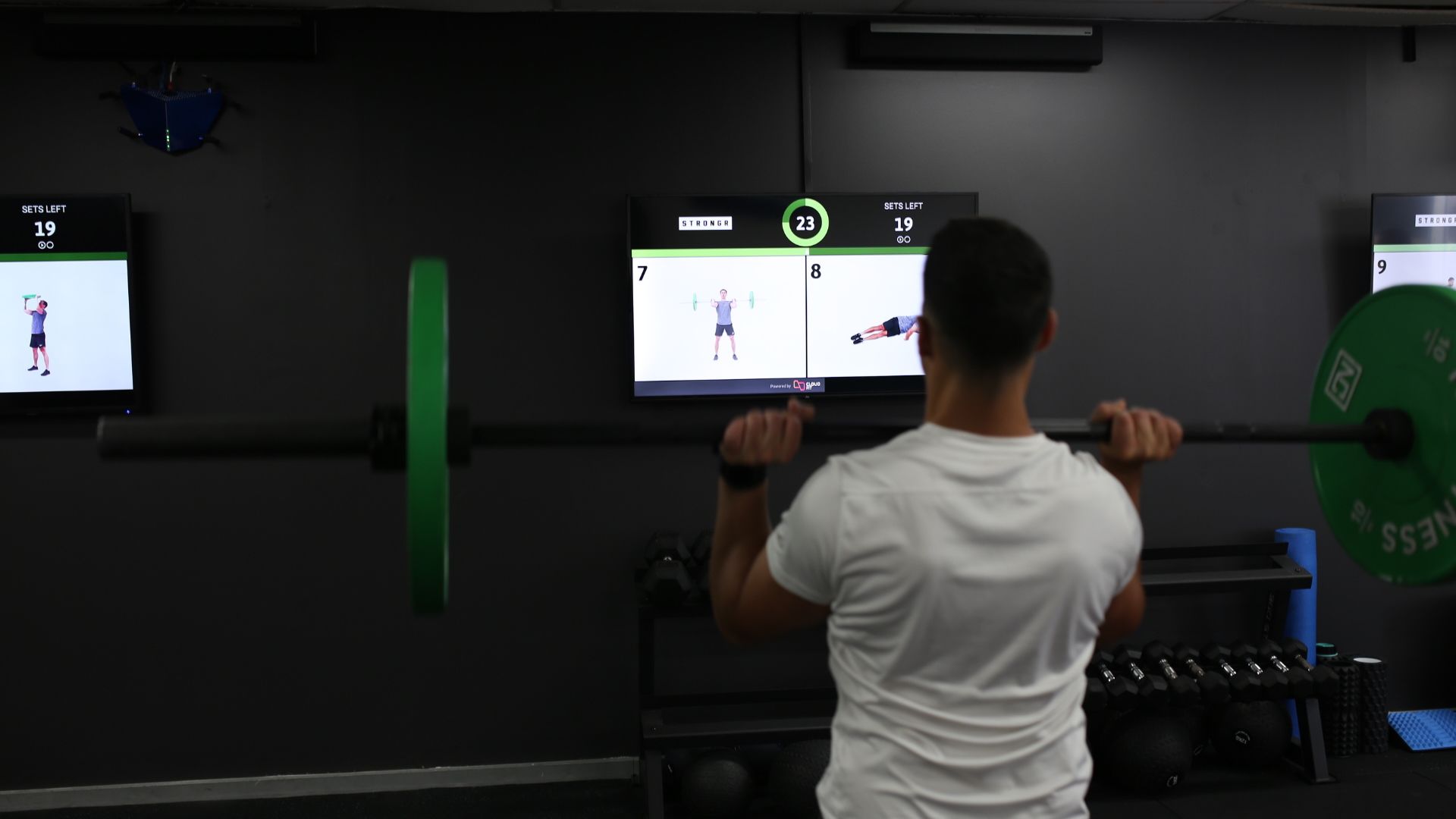
CloudFit sits in a different category. It is built for gyms that want to deliver their own dynamic workouts on screen using customizable timers, digital whiteboards, exercise demos, and flexible layouts that work well for group workouts, changing stations, and more customized programming.
So while these products can all involve screens in a fitness setting, they are solving different problems.
CloudFit is designed for gyms that want more control over how workouts are built and delivered on screen.
Best for announcements, promotions, schedules, welcome screens, and marketing content around the gym.
A good fit if your main goal is visual communication, not active workout delivery.
Best for virtual classes, scheduled playback, or on-demand workout video content from established fitness brands.
A good fit if your main goal is offering pre-produced workouts or filling the timetable with virtual classes.
Built for customized workouts, dynamic sessions, group fitness, and multi-zone training environments.
A strong fit for gyms that want more control, more flexibility, and a clearer system for delivering workouts across the floor.
Why CloudFit fits gyms so well
CloudFit is designed around the real needs of workout delivery, not just generic screen management.
Built for group workouts
Support live group training environments where coaches still lead the room, but the screens make sessions easier to run and follow.
Better member clarity
Members can look up and quickly understand the exercise, timing, and workout flow without losing momentum.
More repeatable sessions
Present workouts more consistently across different coaches, time slots, and locations.
Flexible for different setups
Run a single gym screen or a more advanced multi-screen layout depending on your space and programming style.
Your own programming
Build around your own class formats, coaching cues, exercise media, and brand instead of fitting into someone else’s content library.
More professional workout delivery
Create a clearer, more structured experience that feels more polished for both coaches and members.
What CloudFit customers say
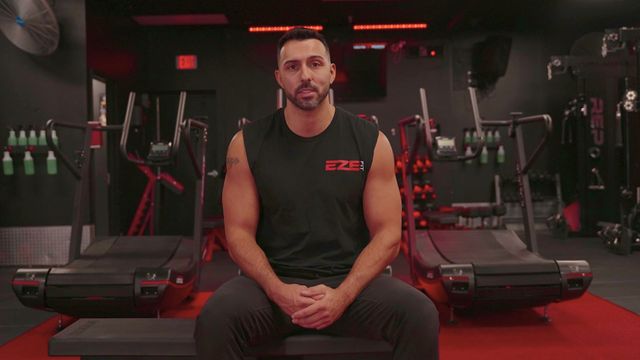
“CloudFit has completely changed the game for us. Before, we wrote out all our workouts on whiteboards, but now we've streamlined our programming across all our locations. Our members instantly know what they're doing, and our coaches can simply focus on coaching. Honestly, it’s helped us streamline our systems, elevate our brand, and completely enhance our member experience.”

Jon Lazo
Eze Fit

“CloudFit has been a game changer for us. It allows us to maximize the 60 minutes we have with our members by saving the trainer countless reps of demonstrating and ensuring proper form, technique, and reps are displayed on a monitor at each station. This tool is a game changer and I highly recommend it.”