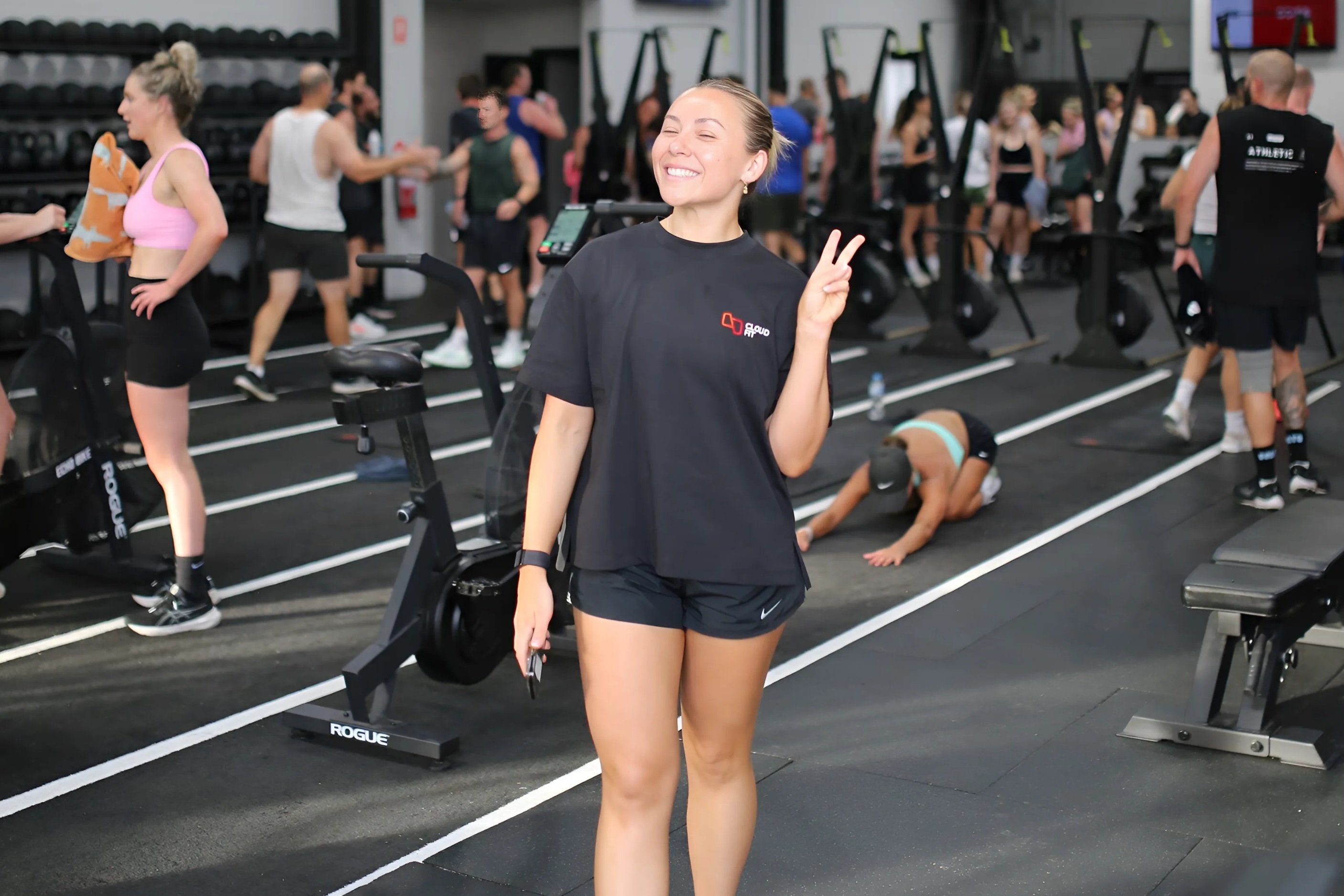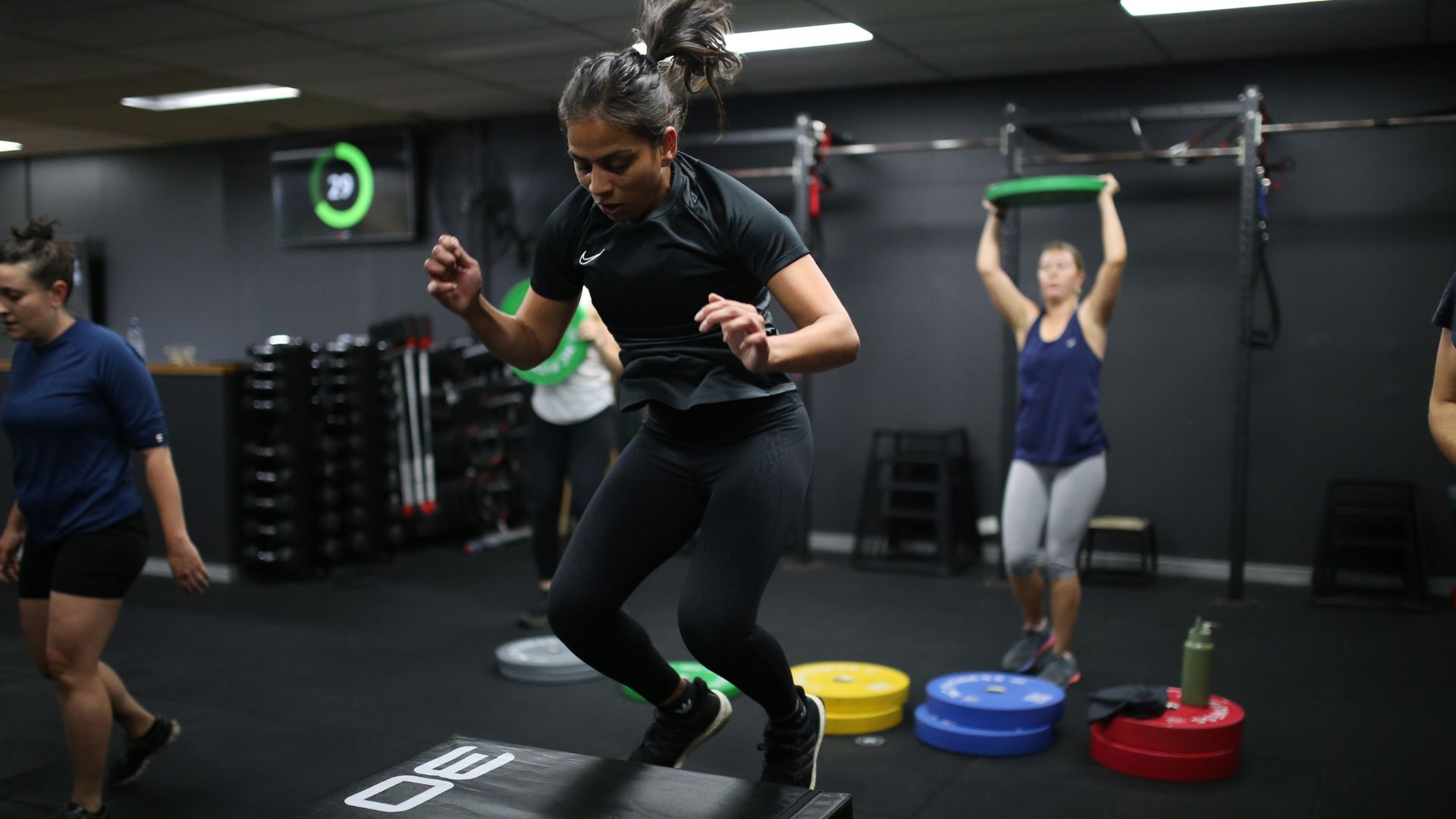
The Real Benefits of a Workout Display System for Your Gym
A workout display system gives gyms a clearer way to run classes. Coaches spend more time with members, workouts are easier to follow, classes feel consistent across every coach and site, and your brand shows up on every screen.
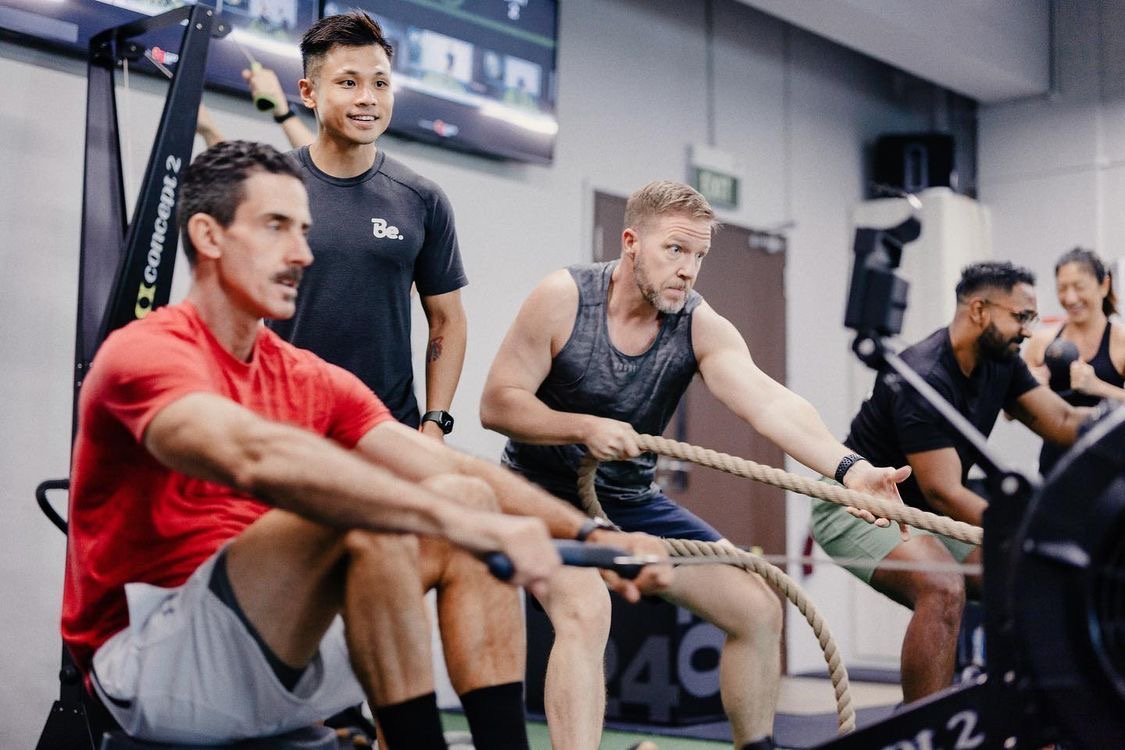
Coach Efficiency: Run Classes Without Yelling Reps
In most group classes, coaches spend a big chunk of every session repeating the same instructions, counting down intervals, and pointing members to the next station. None of that is coaching.
A workout display system puts the timer, exercise demo, and workout structure on screen so members can see what to do next without being told. That gives the coach back the most valuable thing they have: time on the floor.
The difference sounds minor, but it shows up in every class:
- Less repeating, more individual feedback on form and effort
- Less time at the whiteboard, more time motivating the room
- Smoother handoffs between rounds, stations, and zones
- A more confident, more useful coach in every session
- Higher staff retention and reduced trainer burnout
The Core Benefits of Gym Display Screens at a Glance
The benefits of gym display screens show up at every level of how a gym operates, from how each class runs to how the brand shows up across multiple locations.
Free coaches up to coach
Stop spending half the class repeating instructions and counting reps. Coaches focus on form, effort, and member experience.
Easier workouts to follow
Members see the timer, the exercise, and what comes next at a glance. No need to wait for someone to explain the round.
Consistent across coaches and sites
Every staff member runs the same workout the same way, whether it's the head coach on a Tuesday or a new hire on a weekend.
On-brand, professional delivery
Your programming, your branding, your exercise videos. Every screen reinforces the gym instead of looking like generic signage.
Built for multi-zone gym floors
Run different content on different screens for stations, zones, or parallel workouts, not just one mirrored display.
Easier to scale and systemize
Build workouts once, reuse and adapt them, and roll the same delivery out to every location without rewriting from scratch.
Member Clarity: Everyone Follows the Same Workout, Every Time
A great workout falls apart if members can't tell what they're meant to be doing. They wait. They mistime intervals. They watch the person next to them and copy the wrong thing.
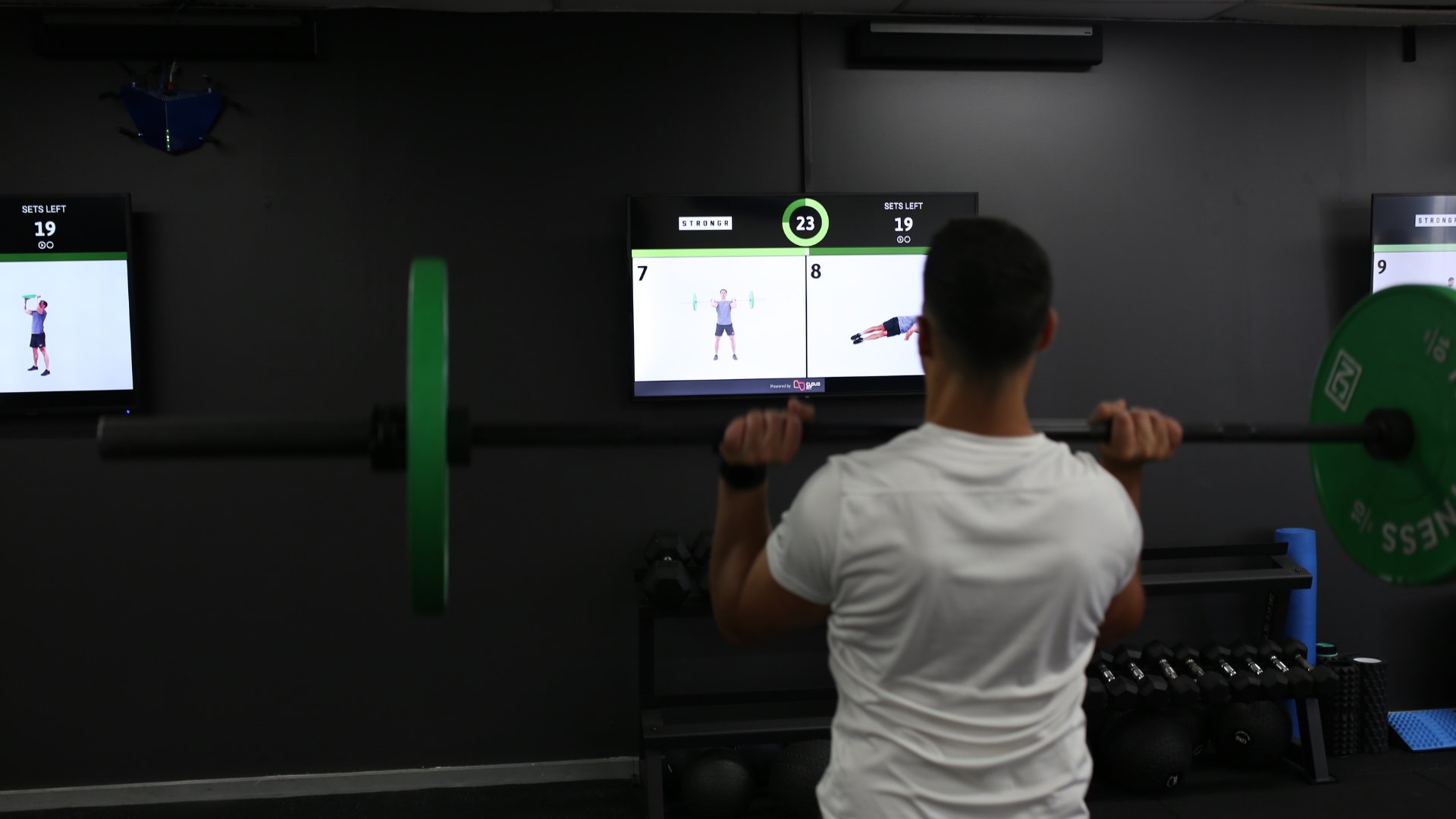
With workout displays, the session is visible from anywhere on the floor:
- The current exercise and a quick demo
- The timer so people know exactly when work and rest start
- The sets, reps, range and effort for each exercise station
- The next move so transitions are smooth, not chaotic
- The workout structure so members understand what they're committing to
The result is a class that feels easier to step into. New members don't feel lost. Returning members don't have to ask. Coaches don't have to explain the same thing five times.
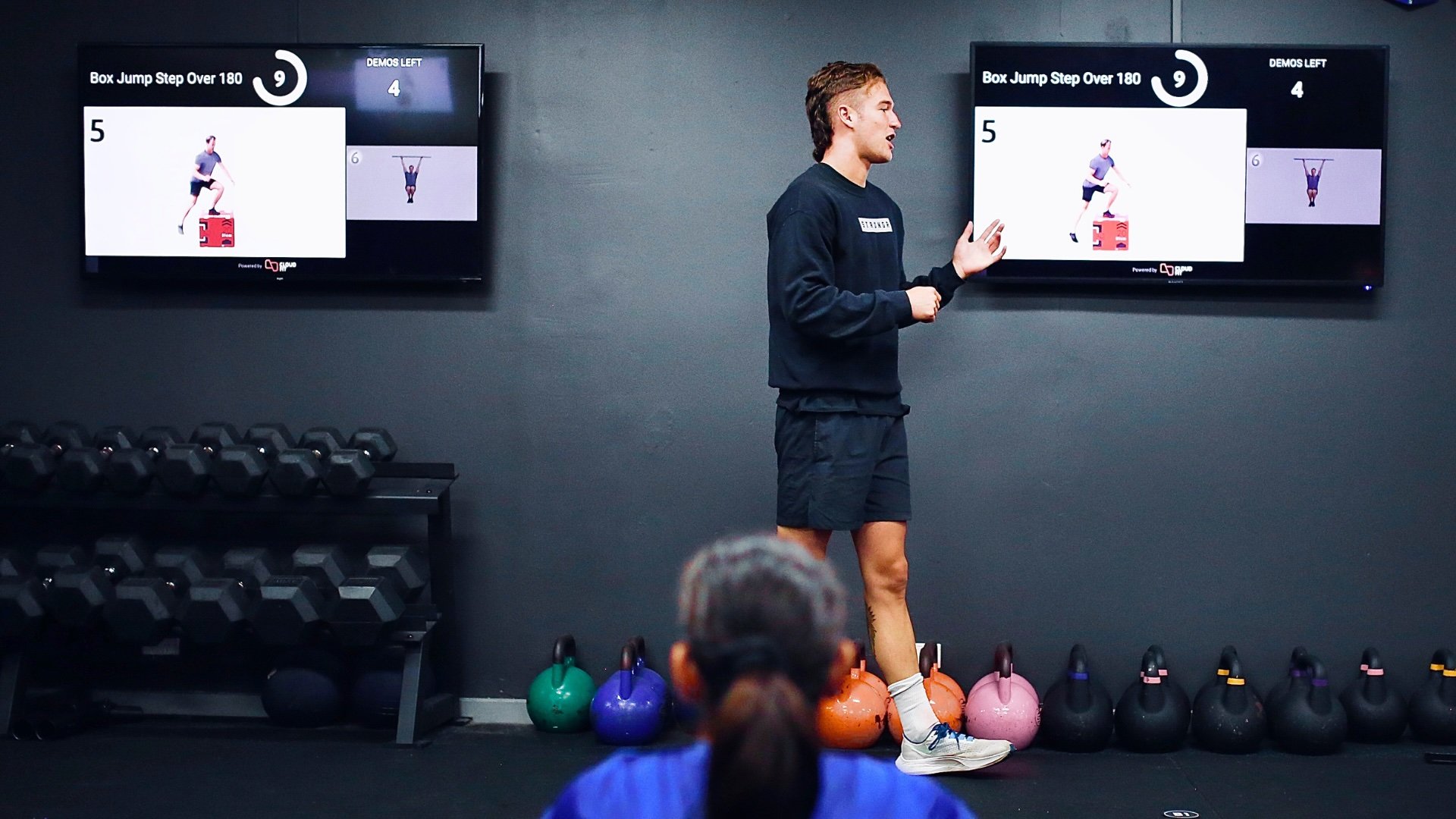
Use a Gym Screen for Class Consistency Across Every Coach and Time Slot
Most gyms have a "best" class. The Tuesday 6am with the head coach. The Saturday small-group session. The one members rave about.
The hard part is making the rest of the timetable feel just as good.
A gym screen makes the workout itself the source of truth, not the coach's memory or whatever's on the whiteboard that day. Programming, timing, exercise demos, and intervals are all set in advance and run the same way every time.
That helps gyms:
- Onboard new coaches faster, because the class delivers itself
- Hold a higher standard for member experience across every session
- Stay consistent during holidays, illness, or staff turnover
- Keep premium pricing because members get a premium-feeling class
Want a deeper dive on this? See how CloudFit helps run more consistent gym classes.
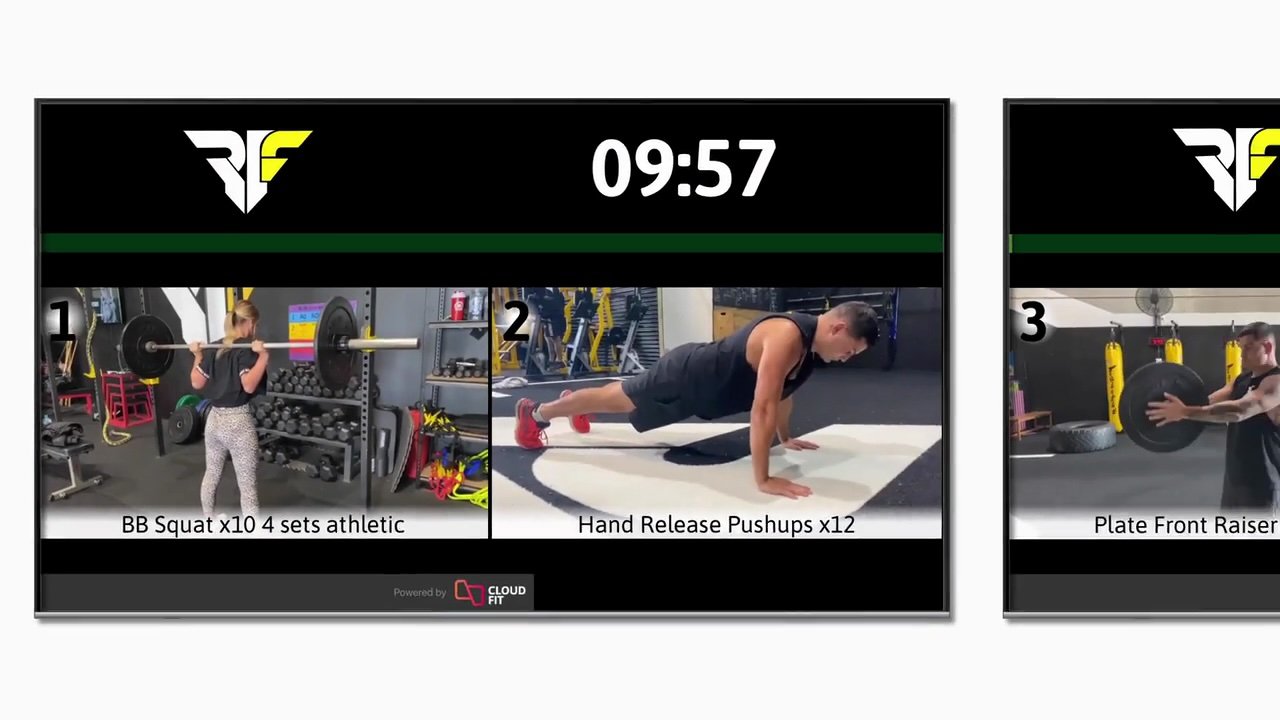
Brand Control: Every Screen Reflects Your Gym's Identity
A whiteboard says nothing about your brand. A pre-recorded virtual class says someone else's brand. A workout display says yours.
Workout displays let gyms put their own programming, their own coaches, their own demonstration videos, and their own visual identity onto every screen in the room.
That matters for two reasons:
- Member perception. Polished, branded delivery makes the gym feel premium and intentional, which supports premium pricing and stronger retention.
- Differentiation. Members can see what makes your programming different from the box gym down the road, because it's literally on the wall.
This matters even more for gyms moving away from a franchise model. See how CloudFit helps gyms go independent after a franchise for more on building your own brand on every screen.
"It's helped us streamline our systems, elevate our brand, and completely enhance our member experience." — Jon Lazo, Eze Fit

Scalability: Roll Out the Same Experience Across Multiple Locations
For single-location gyms, a workout display system is a class delivery upgrade. For multi-location operators, it's an operational backbone.
Build a workout once and run it across every site. Update programming centrally. Onboard new locations without recreating the class experience from scratch each time.
That makes it realistic to:
- Maintain the same class quality at every location
- Open new sites faster because the class is already built
- Reduce reliance on a single "star coach" to set the standard
- Keep your brand consistent across every floor and every screen
For multi-site operators, see how CloudFit standardizes classes across locations. When you're ready to plan a rollout, our gym screen setup guide walks through the hardware and rollout decisions.
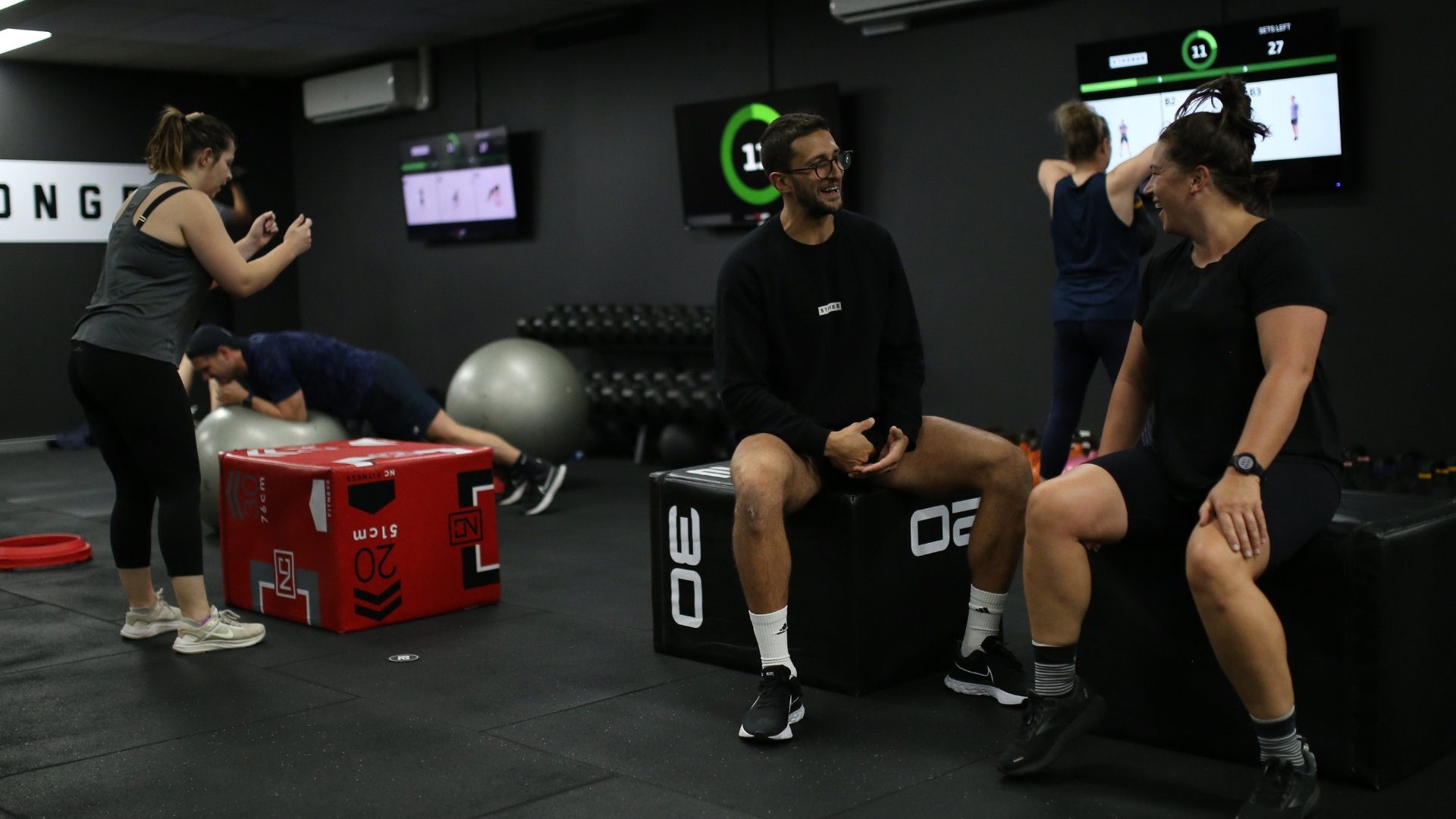
Less Reliance on Any One Coach — and Faster Onboarding
Coaches leave. They go on holiday. They get sick. They cover other classes. Without a system, every one of those moments is a risk to the member experience.
When the workout itself runs on screen, the gym is no longer one resignation away from a quality drop. New hires can step into a class on day one because the timing, structure, and demos are already there. They focus on coaching the room, not memorising the workout.
The same shift makes life easier for the operator: less time briefing coaches, less variance between sessions, and a more transferable system if the gym grows.
Most gyms run on a mix of whiteboards, shouted instructions, and a single screen at the front of the room.
A workout display system replaces the parts of that setup that don't scale. Each comparison below covers a single decision a gym owner faces day-to-day.
Whiteboards are written by hand every day, hard to read from across the room, and can't show a video demo or a live timer.
Workout structure, rep schemes, and notes are visible from anywhere, kept consistent across coaches, and combined with timers and demos. With the Whiteboard Canvas Editor, gyms can also position and style important coaching cues more deliberately.
When the workout isn't on screen, coaches have to re-explain the round, count down intervals, and remind people what's next.
The exercise, the timer, and the next move are visible to everyone. Coaches stop explaining and start coaching.
A pre-recorded video is a fixed asset: hard to update, can't change with the room, and doesn't reflect your programming or brand.
Workouts are built from your programming, easy to update, easy to schedule, and run the way your coaches want them to run.
General digital signage is built for menus, schedules, and announcements, not for delivering a workout in real time.
Built for live workout delivery: timers, intervals, exercise videos, multi-screen layouts, and workout flow.
What CloudFit Customers Say

“Our vision for the future is to transform as many lives as possible through the vehicle of boxing, and we want to become the most reputable boxing brand in Australia, and I don't think we'll be able to do that without the help of CloudFit.”

Darcy Ellis
Hitfit

“CloudFit has completely changed the game for us. Before, we wrote out all our workouts on whiteboards, but now we've streamlined our programming across all our locations. Our members instantly know what they're doing, and our coaches can simply focus on coaching. Honestly, it’s helped us streamline our systems, elevate our brand, and completely enhance our member experience.”

Jon Lazo
Owner, Eze Fit (multi-location functional fitness)
How CloudFit Delivers These Benefits
CloudFit is built for gyms that want every one of these benefits in one platform: coach efficiency, member clarity, consistency, brand control, and scalability.
If you're new to the topic, start with what a workout display system is for the foundational explainer, then read how workout display systems work for the step-by-step. To compare what CloudFit offers in practice, see the full features list, or take a look at CloudFit AI — our built-in workout builder that helps coaches program faster.
For solutions tailored to your situation, see how CloudFit helps with running more consistent gym classes, going independent after a franchise, or standardizing classes across multiple locations.
Or jump to format-specific guidance for functional fitness and HIIT, strength and conditioning, boxing and martial arts, or pilates studios.